
AI-Generated Fashion: The Future of Streetwear
Streetwear has always moved faster than the rest of fashion. A graphic that goes viral on Monday can be on a hoodie by the weekend, and a subculture that didn't exist two years ago can have its own visual language, its own drops, and its own devoted community. It's no surprise, then, that streetwear is one of the first corners of the industry where artificial intelligence has really taken hold.
But "AI-generated fashion" is a phrase that means very different things depending on who's saying it. To some people it's a creative superpower. To others it's a threat to artists and a shortcut to forgettable design. The truth sits somewhere in the middle, and understanding where is the key to buying, designing, and styling AI-influenced streetwear well.
This guide breaks down what AI-generated fashion actually is, how it's used from concept to finished garment, where it genuinely helps, where it falls short, and what questions about originality and ethics are still open. Whether you're a shopper curious about the trend or a creator thinking about using AI in your own designs, this is the practical, honest version.
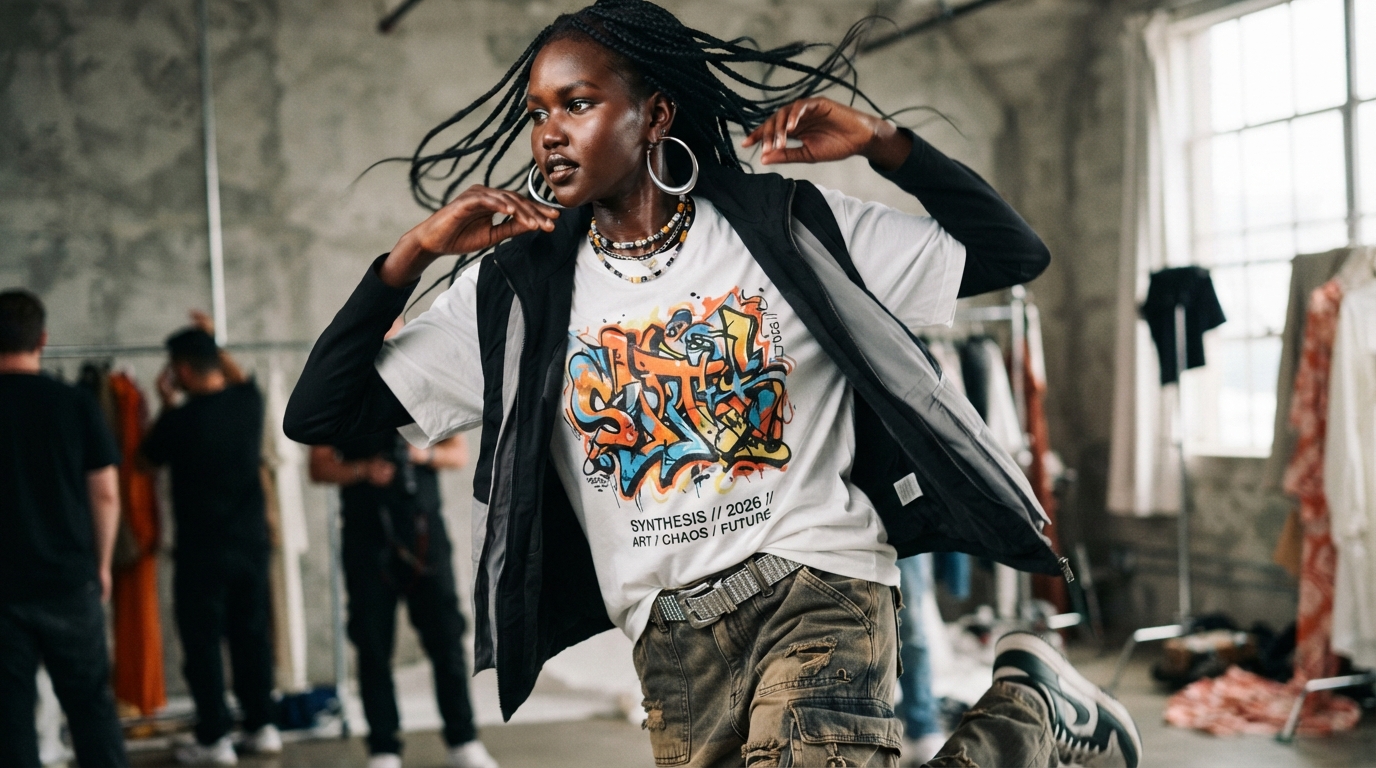
What "AI-Generated Fashion" Actually Means
The label gets stretched to cover a wide spectrum, and it helps to separate the main ways AI shows up in clothing.
AI as a research tool. Trend-forecasting platforms scan social media, search behavior, and shopping patterns to estimate which colors, silhouettes, and themes are gaining momentum. The human designer still makes every creative decision; the AI simply surfaces signals faster than a person could.
AI as a sketchbook. Designers use image generators to explore moods, color stories, and graphic directions at speed. A hundred rough concepts that would take weeks to draw by hand can appear in an afternoon. Most of these never leave the sketchbook stage.
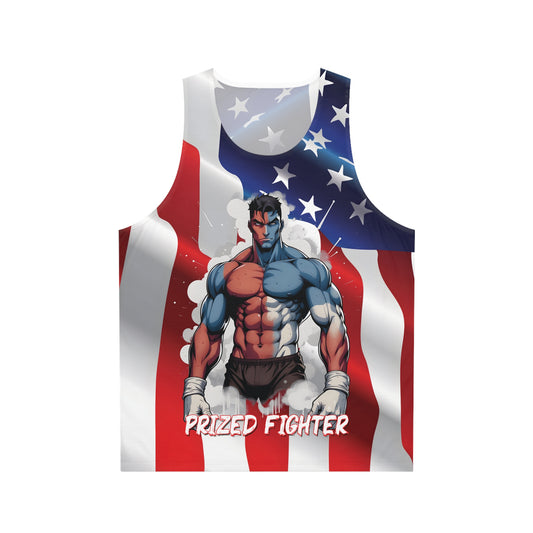
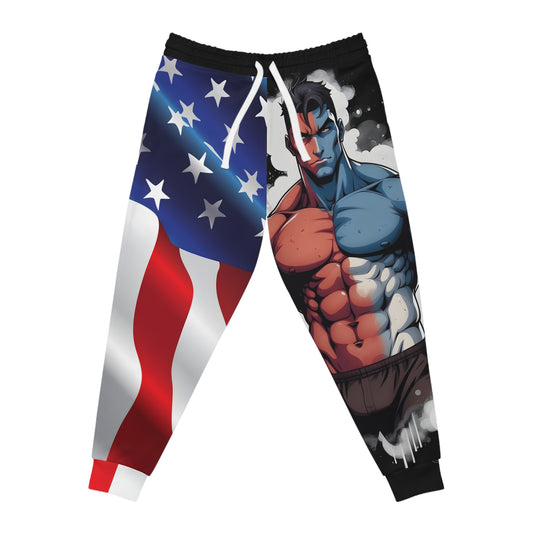
AI as an artwork engine. This is the most visible category in streetwear: graphics, patterns, and illustrations created or heavily assisted by generative tools, then refined and printed on tees, hoodies, bags, and accessories.
AI in the supply chain. Behind the scenes, computer vision and forecasting tools help brands plan production volumes, categorize inventory, and estimate demand. It's the least glamorous use and arguably the most commercially important.
AI in the shopping experience. Virtual try-on, size recommendations, and personalized suggestions all use machine learning to help customers pick items that suit them, and are often credited with reducing returns.
When someone says "AI-generated fashion," they're usually talking about the third category, but all five are shaping what ends up in your wardrobe.
Why Streetwear Is the Natural Home for AI
Several features of streetwear make it an unusually good fit for generative tools.
AI-generated fashion is graphic-driven. Unlike tailoring, where construction and fit dominate, much of streetwear's identity lives in surface design: prints, illustrations, patterns, and typography. Generative AI is strongest exactly here, in image-making.
It moves in fast cycles. Streetwear thrives on drops, collaborations, and fleeting micro-trends. Tools that compress the concept phase from weeks to hours fit that rhythm.
It's built on subcultures. Cyberpunk, gothic, anime, dark fantasy, biopunk, and other niche aesthetics have rich, specific visual vocabularies. Generative tools can remix those vocabularies quickly, and fans of each niche tend to welcome new interpretations.
It suits small batches. Print-on-demand and limited drops mean a design can be tested with a small audience before any serious inventory is committed. AI-assisted concepting pairs naturally with that low-risk model.
It rewards experimentation. Streetwear audiences are comfortable with the strange, the surreal, and the hybrid. AI tends to produce exactly those kinds of unexpected combinations, such as organic textures fused with circuitry, or ancient motifs rendered in neon.
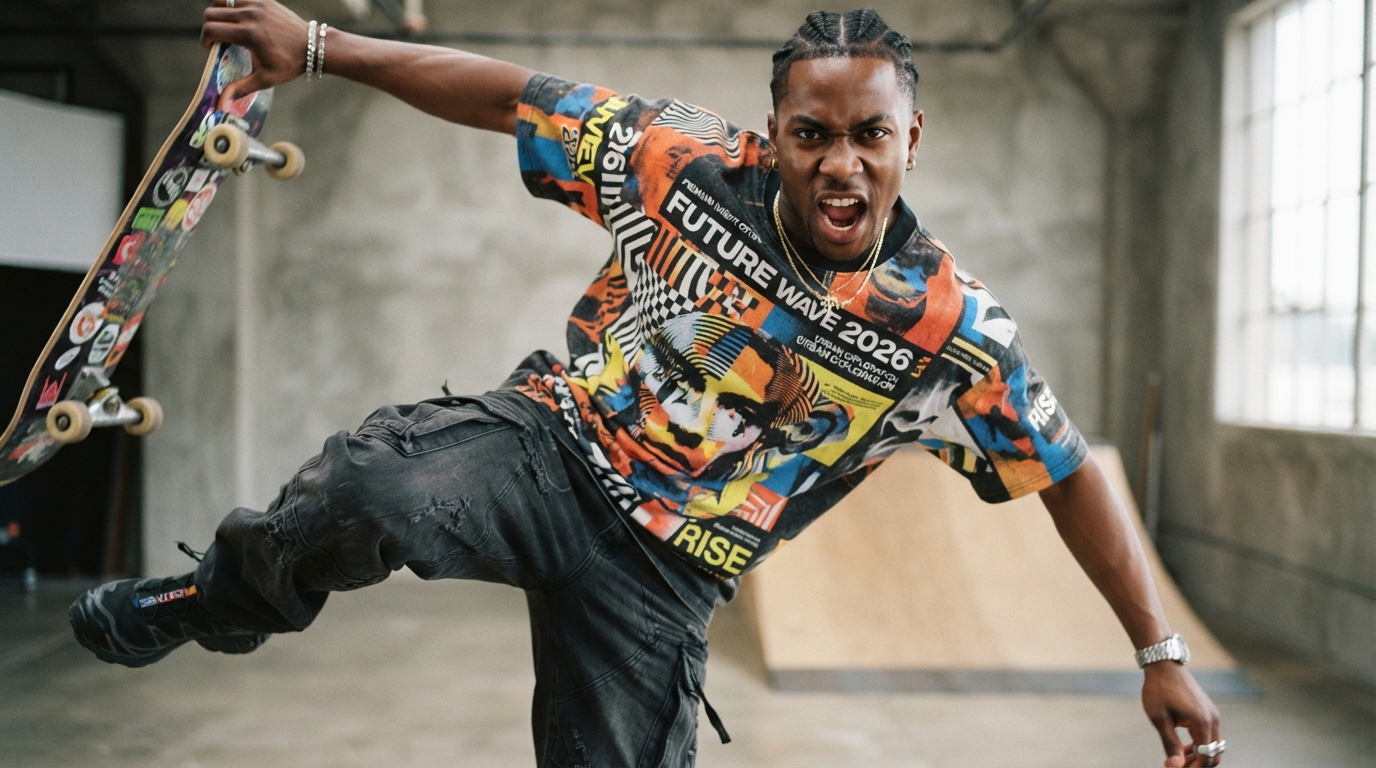
From Prompt to Product: How an AI-Assisted Design Becomes a Garment
It's easy to imagine AI-generated fashion as "type a sentence, receive a hoodie." The reality involves far more human work, and the difference shows in the final product.
1. Concept and direction. A designer decides on the theme, mood, and audience. The best results start with a clear vision, because vague prompts produce vague images.
2. Generation and exploration. Many variations are generated and compared. This is where AI is most obviously powerful: it makes it cheap to explore ideas that would otherwise never be sketched.
3. Curation. A human chooses what's worth developing and discards the rest. This step is where taste matters most, and it's the main factor separating distinctive work from the generic.
4. Refinement. Selected images are cleaned up, composited, and edited. Artifacts, odd details, and anatomical errors are corrected. Many designers redraw or retouch large portions by hand.
5. Technical preparation. A graphic that looks great on a screen may not suit fabric. It needs the right resolution, a suitable color profile, and a layout adapted to the print method, whether that's direct-to-garment, screen printing, sublimation, or embroidery. Fine gradients and tiny details often need simplifying for certain methods.
6. Mockups and sampling. Designs are tested on actual garments to check how colors, placement, and scale look in the real world. Fabric color, texture, and garment cut all change how a graphic reads.
7. Production and quality control. The final pieces are produced, inspected, and refined.
Notice how much of the chain is conventional design and production work. The AI contributes at a few points; the designer shapes everything.
What AI Does Well, and Where It Falls Short
Where AI helps:
- Generating a large volume of concept variations quickly
- Producing intricate, atmospheric artwork that suits all-over prints and statement graphics
- Combining unusual visual ideas in ways that surprise
- Lowering the barrier to entry for independent creators without large budgets or formal training
- Supporting forecasting and planning decisions behind the scenes
Where AI struggles:
- Construction and fit. Generative image tools don't understand how a garment is cut, sewn, or worn. They can render a convincing-looking jacket that couldn't actually be made.
- Fabric behavior. Drape, stretch, weight, and how material moves aren't things a picture generator reasons about.
- Consistency. Keeping a character, motif, or brand look consistent across a full collection is difficult without careful human control.
- Originality. Without direction, outputs can drift toward the average of what the model has seen, which is how many AI-generated graphics end up looking oddly alike.
- Cultural nuance. Symbols, scripts, and motifs from real cultures can be misused or garbled. A designer needs to check what a design actually says or represents.
- Fine details. Text, hands, and small repeating elements often need manual correction.
The takeaway is that AI is a strong collaborator for the image side of streetwear and a weak one for the garment side. Brands and creators who understand that division tend to produce better work.
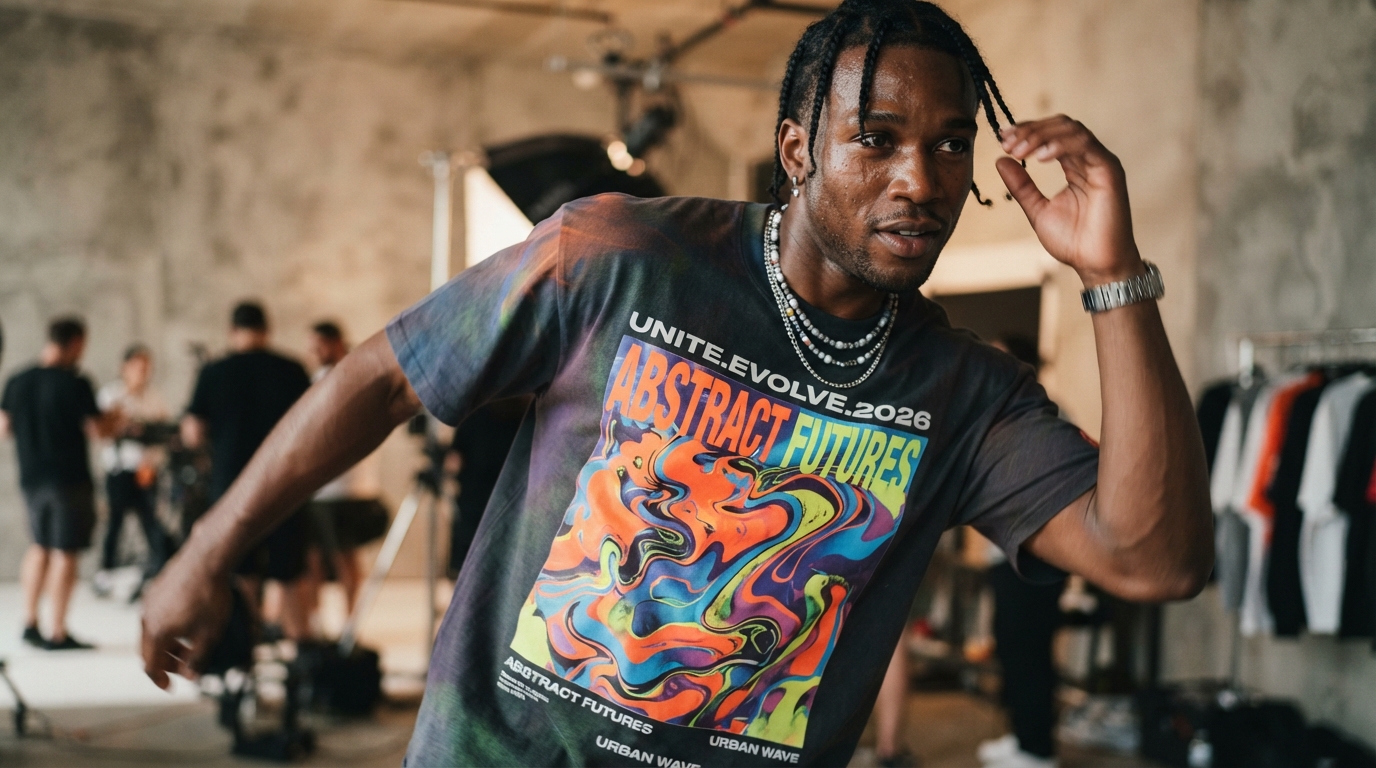
The Sustainability Question
AI is often presented as a sustainability solution, and there is something to that, though it deserves a cautious reading.
The potential upside. Better demand forecasting can help brands avoid overproducing, which is one of fashion's biggest waste problems. Digital sampling and virtual mockups can reduce the number of physical prototypes. Virtual try-on is credited with helping customers choose more accurately, which can cut returns. Pairing AI-assisted design with made-to-order production means garments are made once someone actually wants them.
The caveats. Generative tools consume computing power, which carries its own environmental cost. Faster design cycles can also encourage faster consumption if a brand uses the speed to flood the market with endless new drops. And no algorithm changes what the garment is made from: a polyester hoodie is a polyester hoodie, however it was designed.
A reasonable view is that AI can support more responsible practices, but only when brands choose to use it that way. The tool doesn't make anyone sustainable on its own.
Originality, Ownership, and Ethics
This is the part of the conversation where honesty matters most, because several questions remain genuinely unsettled.
Training data. Many generative models were trained on large collections of existing images, including work by artists who weren't asked or compensated. This has sparked ongoing disputes and legal challenges, and plenty of designers and shoppers now care about how a tool was built, not only what it produces.
Ownership. The rules on who owns AI-generated or AI-assisted work differ between countries and are still evolving. In general terms, legal systems have tended to look for meaningful human creative input, and academic analysis of AI-assisted fashion design has raised open questions about originality and the risk of outputs reproducing existing works. If you're building a brand around AI-assisted designs, this is a good moment to get proper legal advice for your jurisdiction rather than assuming protection exists.
Imitation. Prompting a tool to copy a living artist's style, a recognizable character, or another brand's logo isn't just ethically shaky; it can create real infringement problems. Original direction is both the more respectful and the safer path.
Transparency. More shoppers are asking whether a design was made with AI. Being upfront about your process tends to build trust; hiding it tends to damage it when people find out.
Human artists. Many fashion creators want to see AI used alongside human artists, not instead of them. Commissioning illustrators, crediting collaborators, and treating AI as one tool among several is a stance that sits well with most communities.
None of this means AI-assisted fashion is off-limits. It means the best practitioners treat these questions as part of the craft.
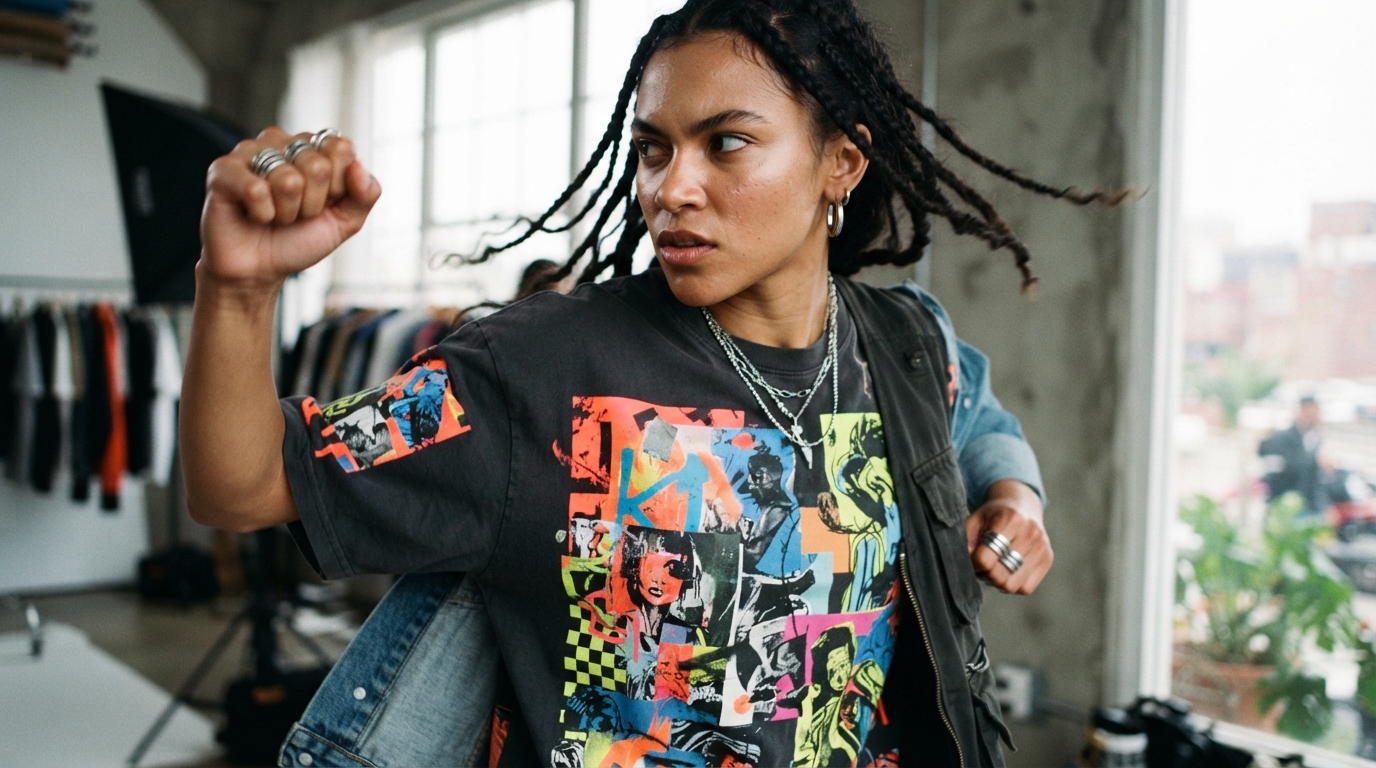
How to Spot Well-Made AI-Assisted Streetwear
If you're shopping rather than designing, a few quick checks can help you separate thoughtful pieces from lazy ones.
Look for intention. A design with a clear concept, a consistent theme, and deliberate composition suggests a human curated and refined it. Random, over-detailed images with no focal point often signal an unedited output.
Check the details. Warped text, strange symbols, mismatched elements, or odd anatomy are signs nobody cleaned up the artwork before printing.
Inspect the print quality. Sharp edges, accurate color, and sensible placement point to a designer who prepared the file for the garment.
Judge the garment itself. Fabric weight, stitching, and fit matter as much as the graphic. A striking print on a poor-quality blank is still a poor-quality product.
Look for transparency. Brands that explain their process, credit their collaborators, and describe how their pieces are made are usually more trustworthy.
Consider longevity. Ask whether you'd still want the piece in six months. The best AI-assisted designs have enough personality to outlast the novelty.
Tips for Creators Using AI in Streetwear
If you're experimenting with generative tools yourself, a few habits make a big difference.
Start with a point of view. Decide what you want to say before opening any tool. A strong concept guides everything that follows.
Treat outputs as raw material. Rework, combine, redraw, and refine. The more of your own hand in the final piece, the more distinctive it becomes.
Build a consistent visual identity. Pick a palette, a set of motifs, and a mood, and apply them across your collection so it reads as a brand rather than a collection of unrelated images.
Prepare files properly. Learn the requirements of your print method, from resolution to color mode to minimum line weights, and test before committing to a full run.
Sample before you scale. Order a physical test piece to check color, placement, and feel.
Respect cultural references. Research any symbols, scripts, or imagery you use, and avoid sacred or sensitive motifs unless you have the knowledge and standing to handle them.
Document your process. Keep records of how a design was created. It helps with transparency, with credit, and with any legal questions that arise later.
Mix with human skills. Collaborate with illustrators, pattern makers, and photographers. The strongest AI-assisted brands tend to be the ones with strong human craft behind them.
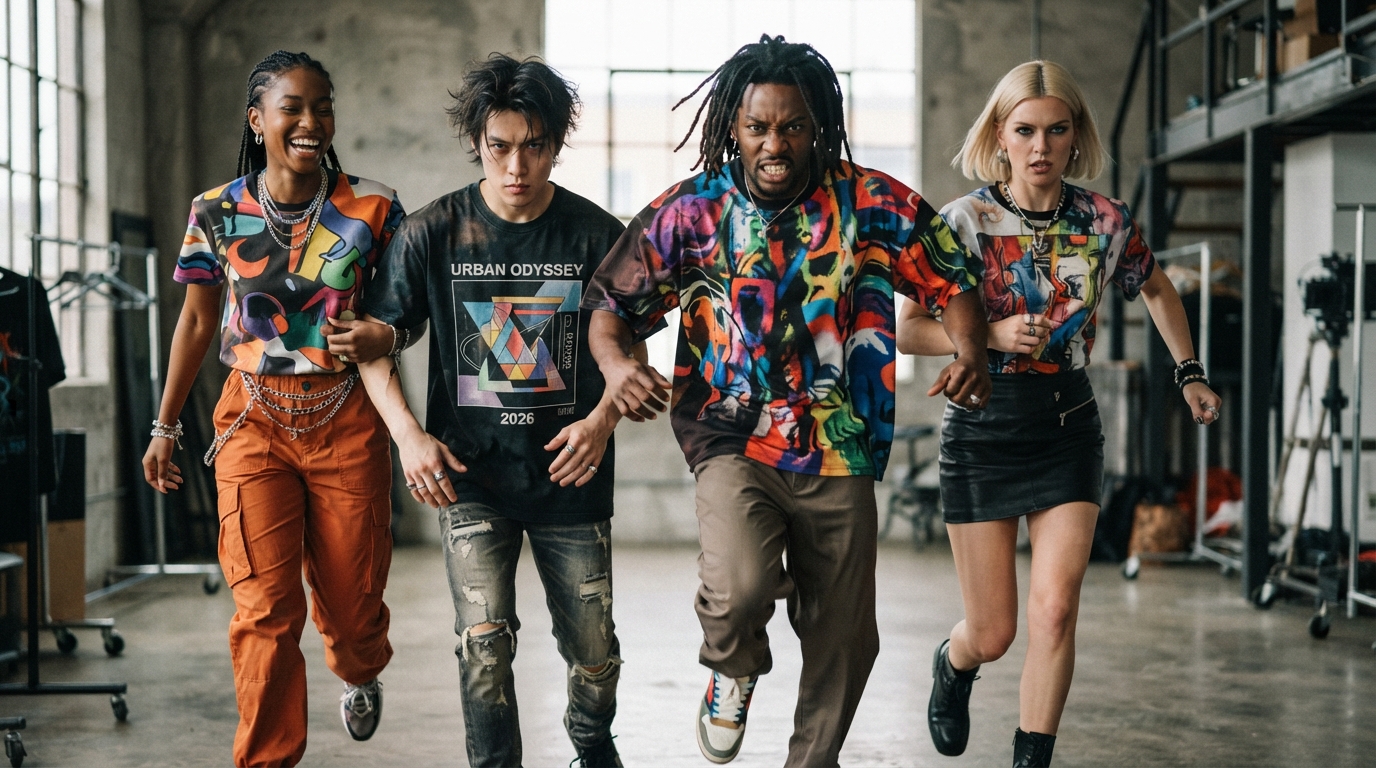
What AI-Influenced Streetwear Looks Like
If you've noticed an overall look to AI-influenced fashion, it's no accident. Certain visual themes recur because generative tools are especially good at them.
Hybrid textures. Organic and mechanical elements fused together, such as coral structures woven with circuitry, or skin-like surfaces with metallic seams.
Atmospheric cityscapes. Neon-lit skylines, rain-soaked streets, and layered signage rendered with cinematic depth, a natural fit for cyberpunk-inspired apparel.
Mythic and fantasy imagery. Dragons, deities, warriors, and creatures reimagined with intricate detail and dramatic lighting, popular in dark-fantasy streetwear.
Surreal collage. Unexpected combinations of objects, eras, and styles that feel dreamlike or unsettling.
Generative patterns. All-over prints built from fractals, flowing forms, and intricate repeating motifs that would be exhausting to draw by hand.
To wear these well, treat the graphic as the focal point and keep the rest of the outfit quiet: dark, simple base layers, clean silhouettes, and minimal competing detail, exactly the same principle that governs any strong statement piece.
Where AI and Streetwear Are Heading
Nobody can predict the details, but several directions seem likely to keep developing with AI-generated fashion.
More personalization. Tools that adapt designs, colors, and fit to individual preferences are becoming more practical, especially for made-to-order brands.
Better virtual try-on. As visualization improves, shoppers will be able to preview garments on themselves with more accuracy, which should reduce guesswork.
Smarter production planning. Forecasting tools will keep helping brands match supply to demand more closely.
Clearer rules. Expect continued debate and evolving regulation around training data, ownership, and disclosure. Brands that build good habits now will be better prepared.
A premium on human craft. As AI-generated imagery becomes everywhere, authentic craftsmanship, distinctive voice, and real community are likely to become more valuable, not less.
Common Mistakes to Avoid
Treating the first output as finished. Raw generations usually need real editing before they're ready for a garment.
Ignoring print requirements. A beautiful image can fail on fabric if it hasn't been prepared for the printing method.
Copying existing artists or brands. It's ethically questionable and can create legal trouble.
Overlooking the garment. Great graphics deserve good blanks, solid construction, and honest sizing.
Following the trend instead of a vision. Brands that chase every visual fad end up looking like everyone else.
Hiding the process. Transparency usually earns more goodwill than secrecy.
Frequently Asked Questions
Is AI-generated fashion just a passing trend?
The visuals may change, but AI as a design and planning tool looks set to stay. What will likely fade is low-effort, unedited output.
Can AI design a whole garment on its own?
It can generate convincing images of garments, but it doesn't understand construction, fit, or fabric behavior. Turning an image into something wearable still needs human technical skill.
Is AI-assisted streetwear less original than hand-drawn work?
Not automatically. Originality depends on the direction, curation, and refinement a creator brings. A thoughtful designer using AI can produce more distinctive work than a careless one drawing by hand.
Who owns an AI-generated design?
It depends on the country and the level of human involvement, and the law is still developing. Anyone building a business around such designs should seek local legal advice.
Is AI fashion more sustainable?
It can support sustainability through better forecasting, digital sampling, and made-to-order production, but it also uses computing resources and can encourage overproduction. The outcome depends on how it's used.
How can I tell whether a design was made with AI?
Sometimes you can't, especially when it's been carefully refined. Warped details and generic, over-rendered imagery can be clues, but the more reliable signal is whether the brand is open about its process.
Can I use AI to design my own streetwear brand?
Yes, many independent creators do. Start with a clear vision, refine your outputs by hand, prepare your files for print, sample before scaling, and be transparent with your audience.
Final Thoughts
AI isn't replacing streetwear's creativity; it's changing where that creativity is spent. Less time goes into producing the first rough image, and more goes into deciding what's worth making, refining it into something with a point of view, and building a garment that's actually good to wear. The future of AI-generated streetwear will belong to the creators and brands who treat the technology as a tool for craft, who stay honest about how they use it, and who never lose sight of the person who'll be wearing the piece.