

Cyberpunk Home Décor: How to Build a Neon Space
Most people discover cyberpunk home décor through what it looks like on screen: rain-soaked streets, towering signage, and rooms lit by nothing but a buzzing pink sign and the glow of a monitor. Then they look around their own living room, with its beige walls and a single overhead bulb, and wonder how to close the gap. The good news is that a cyberpunk home doesn't require a renovation or a movie-set budget. It requires a handful of deliberate choices about light, color, texture, and the objects you let into the room.
This guide walks through how to build a cyberpunk home from the ground up: the palette, the lighting that does most of the heavy lifting, the furniture and materials that make a space feel lived-in and futuristic at the same time, and the small details that tie it all together. Whether you're dressing a whole apartment or a single desk corner, the same principles apply.

What Cyberpunk Home Décor Actually Looks Like
Cyberpunk home décor interiors borrow from the same references as cyberpunk fashion: the crowded apartments of Blade Runner, the cluttered hacker dens of 1980s and '90s science fiction, and the dense, signage-covered cityscapes of Japanese anime and manga. What they share is a feeling of layered, lived-in technology. Nothing looks brand new. Cables run along walls, screens glow in corners, and a single colored light source throws long shadows across dark surfaces.
That last point is the key to the whole style. A cyberpunk room is not bright. It is dark, with pools of intense color, so the eye is always drawn toward something glowing. If you remember one rule from this guide, make it that one: dark rooms, concentrated color.
It also helps to understand what cyberpunk décor is not. It isn't a showroom of matching furniture, and it isn't a maze of random gadgets. The best cyberpunk spaces feel curated and slightly chaotic at once, like a place a real person has been living and tinkering in for years.
Start With the Palette
Before buying a single lamp, decide on your colors. A cyberpunk palette has two parts, just like a cyberpunk wardrobe.
The base: deep black, charcoal, gunmetal grey, and midnight navy should cover most of your large surfaces. These dark tones absorb light, which is exactly what makes colored lighting look so dramatic against them. If painting a full room feels like too much commitment, paint a single feature wall or even the wall directly behind your desk or bed.
The glow: choose two accent colors at most. The classic pairing is magenta and cyan, which sit opposite each other and create that instantly recognizable neon-noir contrast. Other combinations that work well include electric purple with acid green, or hazard orange with a cool blue. Limiting yourself to two keeps the room cohesive; three or four competing colors starts to look like an arcade.
A practical tip: test your colors with cheap lighting before committing to paint or large purchases. A color-changing bulb or an inexpensive LED strip lets you see how magenta or teal actually behaves on your walls at night, which is very different from how it looks on a screen.
Lighting: The Most Important Element
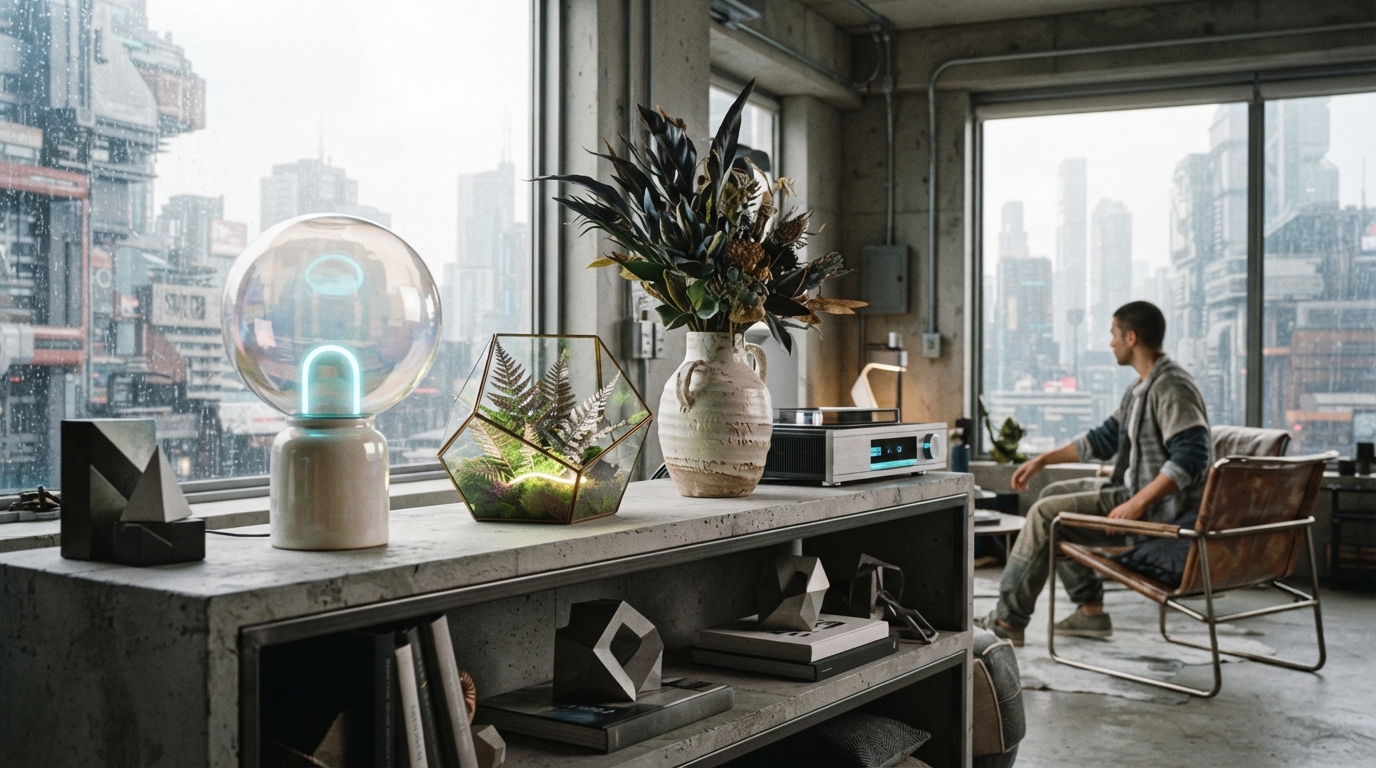
If you only invest in one category, make it lighting. In a cyberpunk home, light is the décor.
Neon and Neon-Style Signs
Nothing says cyberpunk faster than a neon sign. Traditional glass neon is beautiful but fragile and expensive, so most people choose LED neon flex, which gives the same soft, glowing-tube look at a lower cost, with less heat and far more durability. A sign doesn't need to say anything clever. Abstract shapes, a single kanji-style character, a city skyline outline, or a simple geometric line all work. Hang one above a bed, a desk, or a sofa as a focal point, and let it be the brightest thing in the room.
LED Strips and Bias Lighting
Color-changing LED strips are the workhorse of the cyberpunk home. Run them behind a desk, along the underside of shelves, around a monitor, under a bed frame or sofa, or tucked into the top of a wall to wash the ceiling in color. Indirect lighting like this creates the glowing-edge effect that makes furniture look like it's floating, and it hides the light source itself, which keeps the look moody instead of harsh.
Bias lighting, meaning a soft light placed behind a monitor or television, does double duty. It's visually striking and it reduces the contrast between a bright screen and a dark wall, which many people find easier on the eyes during long sessions.
Smart Bulbs and Scenes
Smart bulbs let you change the whole mood of a room from your phone. Set a bright, cooler scene for working during the day, and switch to a deep magenta or violet in the evening. Being able to shift between a functional room and a cinematic one is what makes a cyberpunk home livable rather than just photogenic.
Lighting Rules That Keep It Looking Intentional
Keep one dominant color per room. A magenta bedroom with cyan accents reads as designed. Every light in a different hue reads as chaotic.
Avoid bare overhead lighting at night. Turn off the main light and let the colored sources do the work.
Layer your light at different heights. A floor-level strip, a mid-height sign, and a desk-level lamp give the room depth rather than one flat wash of color.
Mind the practical side. Always use reputable, properly rated power supplies and keep strips away from anything that traps heat. Good lighting should be stylish and safe.
Walls and Wall Art
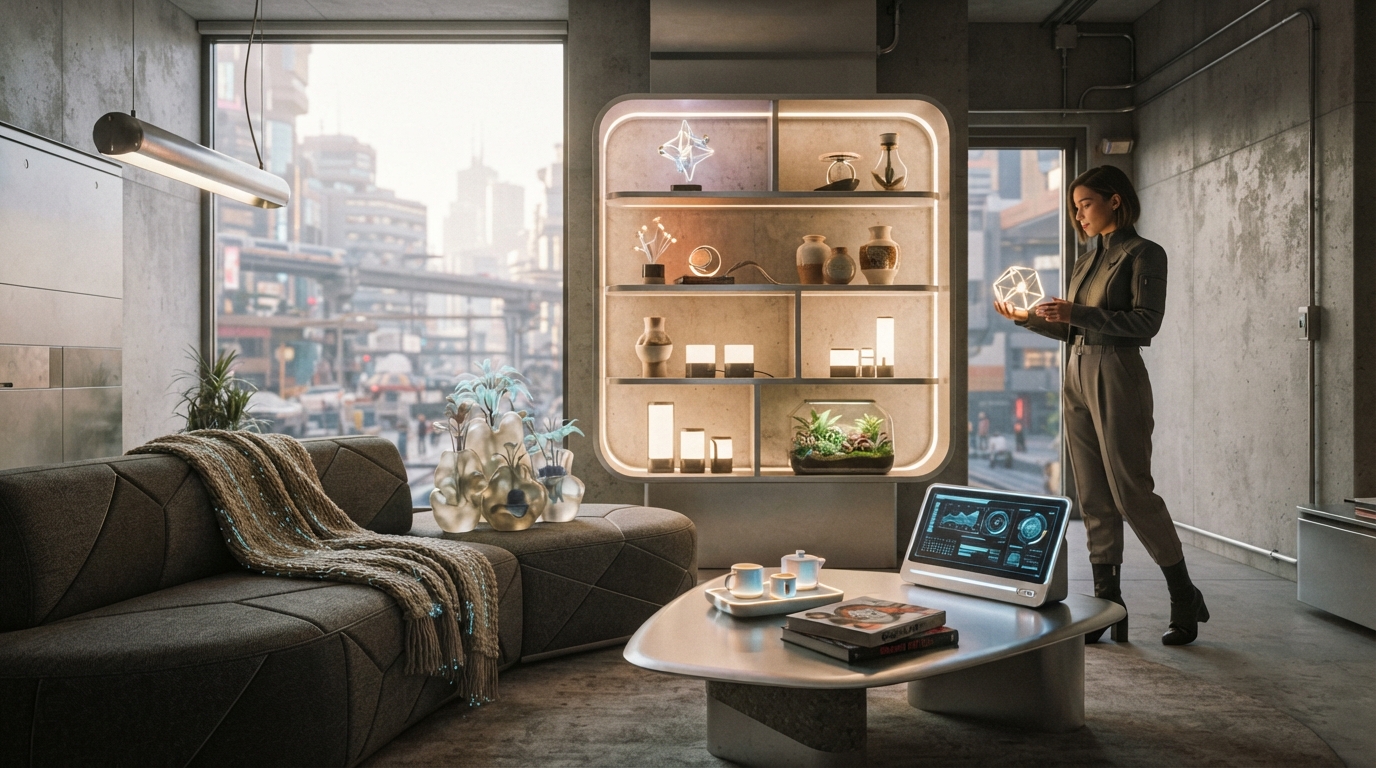
Once the lighting is in place, the walls are your canvas. Cyberpunk walls tend to be dense rather than minimal, so don't be afraid to fill them.
Posters and prints are the easiest and most affordable option. Look for cityscape illustrations, circuitry patterns, retro-futurist typography, anime and manga-inspired art, and moody portraits with neon lighting. Printed work with strong dark backgrounds suits the palette best, and it will look even better when a colored light grazes across the surface.
Gallery-style groupings work better than a single large piece in most rooms. Arrange a cluster of frames in matching black or gunmetal finishes and vary the sizes. Matching frames keep the arrangement tidy even when the artwork inside them is busy.
Textural walls add the lived-in quality the style depends on. Exposed brick painted dark, concrete-look panels, corrugated metal sections, or a wall of black acoustic panels all add the industrial grit that stops a room from feeling like a showroom.
Signage and found objects such as vintage-style metal signs, old circuit boards mounted in frames, or retro electronics displayed as sculpture reinforce the sense that the room belongs to someone who actually builds and tinkers.
Furniture and Materials
Cyberpunk home décor furniture favors function and hard edges over softness and ornament.
Choose dark, low-profile pieces. A black or charcoal sofa, a low platform bed, and a slim metal-framed shelving unit keep sight lines open so the lighting can travel across the room.
Mix materials deliberately. The look relies on contrast: matte black metal beside glossy glass, rough concrete beside smooth faux leather, cold steel against warm wood. Pair at least three materials in each room to build depth.
Lean on glass and metal. Glass-topped tables, chrome or blackened-steel legs, and mirrored surfaces all bounce colored light around the room, effectively multiplying your lighting without adding a single bulb.
Use industrial shelving. Open metal racks displaying books, figurines, and gadgets feel more cyberpunk than closed cabinets, and they give you a place to tuck LED strips.
Add one hero piece. A dramatic chair, an angular desk, or an unusual statement lamp gives the room a focal point beyond the lighting itself. Just as with a wardrobe, one bold piece surrounded by quiet ones always looks more intentional than five competing statements.
Textiles: Softening Without Losing the Edge
A room made entirely of metal and glass quickly becomes cold and uncomfortable. Textiles provide the balance.
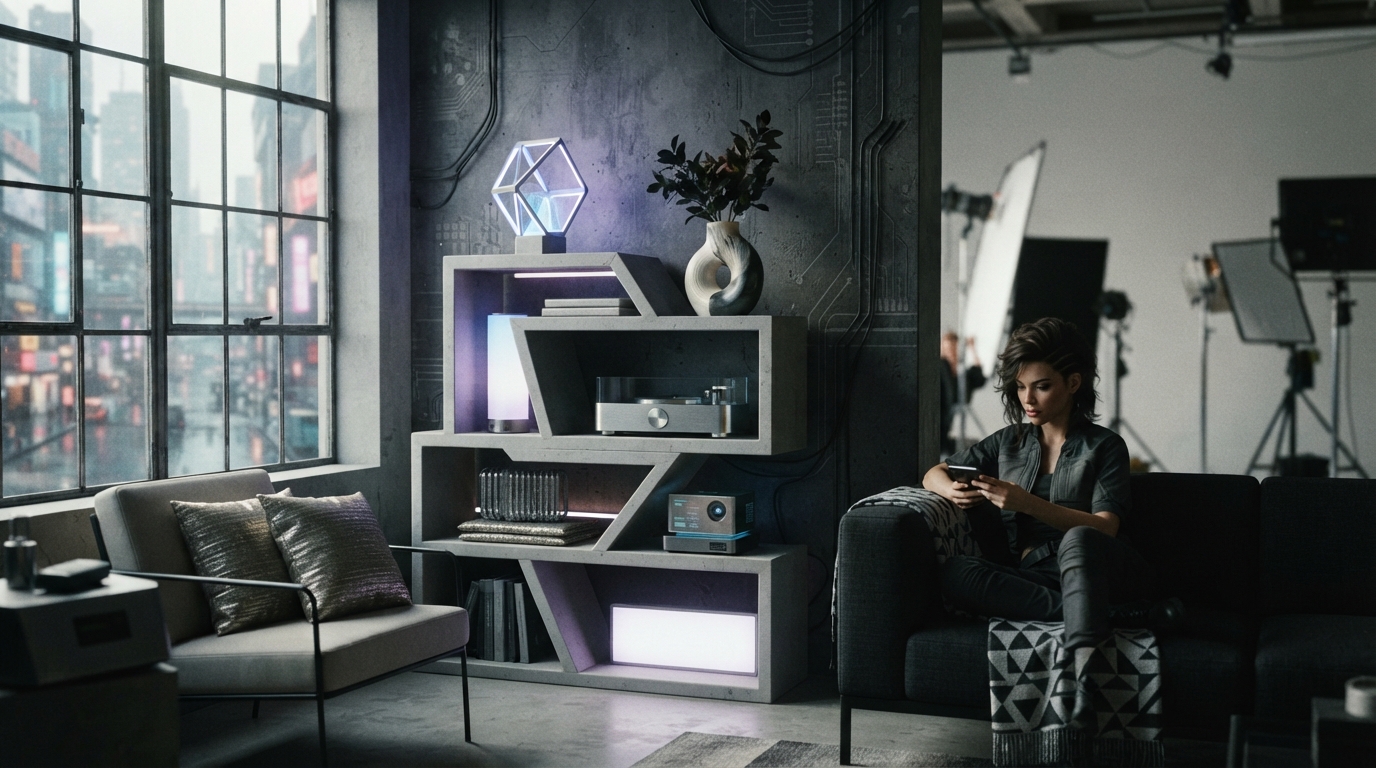
Stick with dark, dense fabrics: black or charcoal blackout curtains, which also let your colored lighting shine at any hour; a low-pile dark rug; and throw pillows in matte black, grey, or one of your two accent colors. Technical-looking materials such as faux leather, coated fabric, and quilted nylon suit the aesthetic better than soft, floral, or heavily patterned cotton.
If you want a graphic touch, choose a single printed textile, such as a pillow or blanket with a circuitry pattern or a dystopian skyline, and keep everything else plain. It's the same restraint that makes a graphic tee work in an outfit: one loud piece, quiet supporting cast.
Technology as Décor
In most styles, technology is something you hide. In a cyberpunk home, it's part of the display.
Make the desk setup the centerpiece. Dual or ultrawide monitors, a mechanical keyboard with colored backlighting, and a tidy but visible cable run read as the beating heart of the room.
Show your cables, but tame them. Exposed cabling suits the aesthetic, but tangled chaos does not. Use cable sleeves, clips, and raceways in black to turn a mess into a deliberate, engineered look.
Display retro hardware. Old consoles, vintage speakers, cassette players, and obsolete gadgets add nostalgia and texture, especially lit from below on a shelf.
Add an ambient screen. A looping city-at-night animation or a slow-moving abstract visual on a spare display or television makes the room feel alive, even when no one is actively using it.
The Small Details That Finish the Room
The difference between a room with a few neon lights and a room that feels like a world comes down to the small objects.
Drinkware and desk items. Graphic mugs, tumblers, and glassware with dark or neon-accented designs make everyday routines feel on-theme. They're also the cheapest way to start, since a single mug on a dark desk already says something.
Ornaments and figurines. Small sculptures, robot figures, skull or mask pieces, and miniature cityscapes work well on shelves, especially when an LED strip lights them from behind.
Plants, with a twist. A few hardy plants soften hard edges and look striking under colored light. Dark-leafed varieties or plants in matte black planters keep the palette intact.
Scent and sound. Dim light and a low ambient soundtrack, such as synthwave or dark electronic music, complete the atmosphere. A subtle incense or candle scent finishes the effect without adding visual clutter.
Room-by-Room Ideas
Living room: Make the sofa wall your feature. Hang an LED neon sign or a gallery cluster above it, run a color strip along the back of the TV unit, and keep a dimmable floor lamp as your functional light source.
Bedroom: Use warm-leaning colors here, such as deep violet or soft magenta, since cooler blues can feel stimulating at night. Put LED strips behind the headboard, hang blackout curtains, and keep technology and cables away from the bed to preserve a restful feel.
Home office or gaming setup: This is where the style is easiest to commit to. Combine bias lighting, a dark wall, a cable-managed desk, and one standout sign or poster behind you. It also makes for excellent video-call backgrounds.
Bathroom or hallway: Small spaces are ideal for bold experiments. A single colored light and a dark accent wall can transform a forgotten corridor into something cinematic.
Rented spaces: If you can't paint or drill, rely on removable adhesive hooks, plug-in lamps, peel-and-stick wall panels, free-standing shelves, and freestanding signs. Lighting and decor objects can create 90% of the effect without touching the walls.
Building a Cyberpunk Home on Any Budget
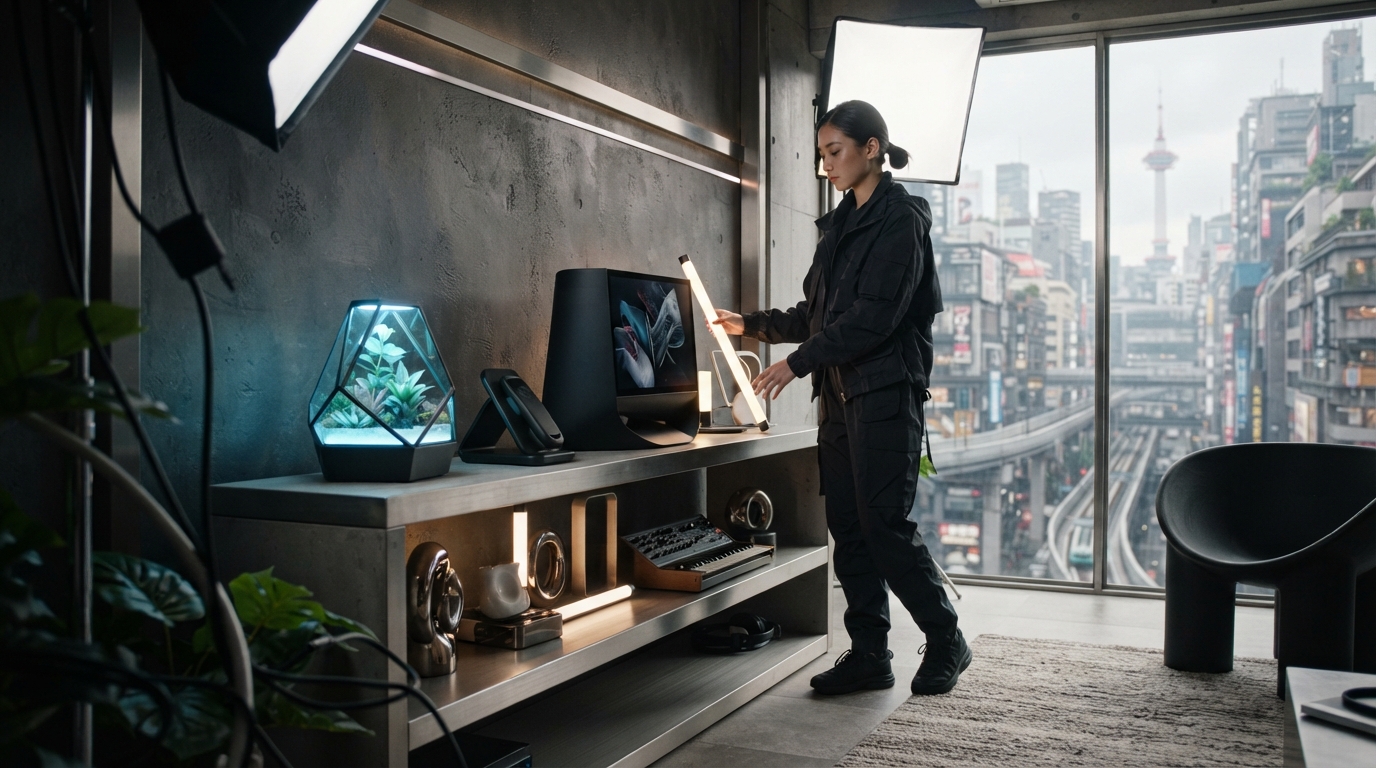
You don't need to transform everything at once. A sensible build order is:
Start with lighting. A few LED strips and one color-changing bulb cost very little and change the room more than any other purchase.
Add wall art next. A set of prints or posters in matching frames gives your lighting something to play across.
Layer in small objects. Mugs, figurines, and desk accessories let you build the theme gradually and swap pieces out as your taste evolves.
Upgrade furniture and a neon sign last. These are the larger investments, so wait until you know which colors and moods you reach for most.
Common Mistakes to Avoid
Overlighting the room. Too many bright sources wash out the mood. Cyberpunk home décor needs shadows.
Using too many accent colors. Stick to two. More than that and the room starts to look like a nightclub rather than a home.
Ignoring comfort. A cold, hard room is fun for a photo and miserable to live in. Keep at least one soft, comfortable seating area.
Letting clutter become mess. Dense is good; dirty and disorganized is not. Intentional clutter has a pattern and a purpose.
Buying pieces that fight the palette. One pastel cushion or a warm yellow lamp can quietly break the entire illusion. Check every new item against your base and accent colors first.
Forgetting about daytime. A room that only works at night is only half a room. Use curtains, dimmers, and smart scenes so the space functions in daylight too.
Frequently Asked Questions
How do I make my room look cyberpunk on a small budget?
Begin with color-changing LED strips and a dark accent wall or large dark poster. Those two changes alone create the contrast and glow the style depends on.
What colors are best for a cyberpunk room?
Dark bases like black, charcoal, and navy, paired with no more than two neon accents. Magenta and cyan is the classic combination.
Are LED neon signs safe to leave on?
Quality LED signs run cool and use little power, but always buy from reputable sellers, use the supplied power adapter, and follow the manufacturer's instructions.
Can I do cyberpunk décor in a rented apartment?
Yes. Plug-in lighting, adhesive hooks, free-standing shelves, and removable panels let you build the look without permanent changes.
Will a cyberpunk room feel too dark to live in?
Not if you use dimmable and layered lighting. Smart bulbs let you switch between a bright working mode and a moody evening mode in seconds.
How do I keep it from looking like a theme park?
Edit ruthlessly. Choose a restrained palette, limit yourself to a few statement pieces, and let real, personal objects mix with the themed ones.
Final Thoughts
A cyberpunk home décor is built on contrast: dark rooms against bright color, hard materials against soft textiles, sleek technology against worn, tactile objects. Start with the lighting, commit to a tight palette, add art and objects slowly, and keep the space comfortable enough to actually live in. Do that, and even a plain rented room can start to feel like a corner of the neon city.