
Cyberpunk Footwear: Sneakers for the Neon City
Footwear is the piece cyberpunk outfits get wrong most often. People invest in the jacket, the graphic tee, the accessories - and then finish the whole look off with a plain pair of running shoes that could belong to any outfit from any decade. Footwear is supposed to be doing work in a cyberpunk fit, not just covering your feet. It's ground-level detail in a style that's built on detail.
This guide covers what actually makes a sneaker or boot read as cyberpunk, how to choose between the main silhouette options, and how to keep footwear from feeling like an afterthought in an otherwise considered outfit.

Where Cyberpunk Footwear Gets Its Visual Language
The footwear in cyberpunk fiction and film didn't come out of nowhere - it borrows heavily from tactical and utility gear built for people who move through hostile environments. Combat boots, industrial work boots, and military-issue high-tops all show up in the visual DNA of the aesthetic, filtered through a neon-lit, tech-augmented lens.
That lineage matters because it explains why the best cyberpunk footwear still looks functional rather than purely decorative. A boot with a genuinely segmented sole or a sneaker with real reinforced stitching reads as more convincing than a shoe that only mimics those details in a flat print. The aesthetic rewards footwear that looks like it could survive actual use.
Why Footwear Matters More in Cyberpunk Style Than in Most Other Aesthetics
In a lot of style categories, shoes are the finishing touch - the last five percent. In cyberpunk fashion, footwear is closer to a foundation piece, on par with outerwear. That's because the aesthetic is built on the idea of a body that's prepared, mobile, and slightly augmented, and nothing communicates that faster than what's happening below the ankle.
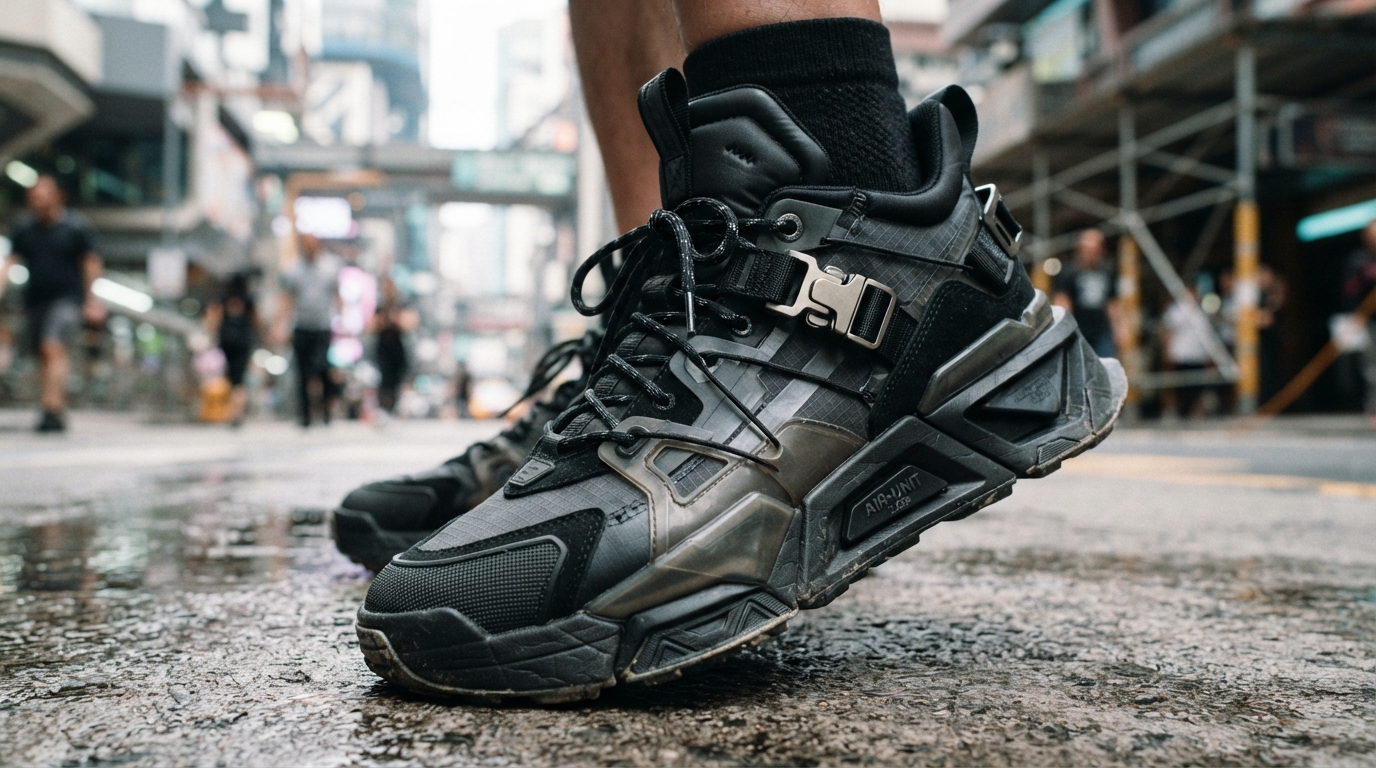
A high-top sneaker with reflective panels or a chunky-soled boot with exposed stitching does more to sell the "tech-forward, ready for anything" attitude than almost any other single piece, simply because it's the part of the outfit closest to the ground - closest to movement, function, and terrain.
High-Tops vs. Low-Tops: Which Reads More Cyberpunk
Both silhouettes work, but they send slightly different signals, and picking the right one depends on the rest of your outfit.
High-tops wrap the ankle and read as more tactical and protective - they suggest movement through rough terrain, which lines up naturally with cargo pants and a longer outer layer. They're the stronger choice for "full tech" or tactical-leaning outfits where the whole fit is already leaning maximalist.
Low-tops are quieter and pair better with slimmer trousers or a cleaner, everyday cyberpunk outfit. They let other pieces - a graphic tee, a bold jacket - carry the visual weight, which makes them the better pick when you want footwear to support the outfit rather than compete with it.
Neither is more "correct" than the other. The decision comes down to how loud the rest of your outfit already is.
Chunky-Soled Boots: The Statement Option
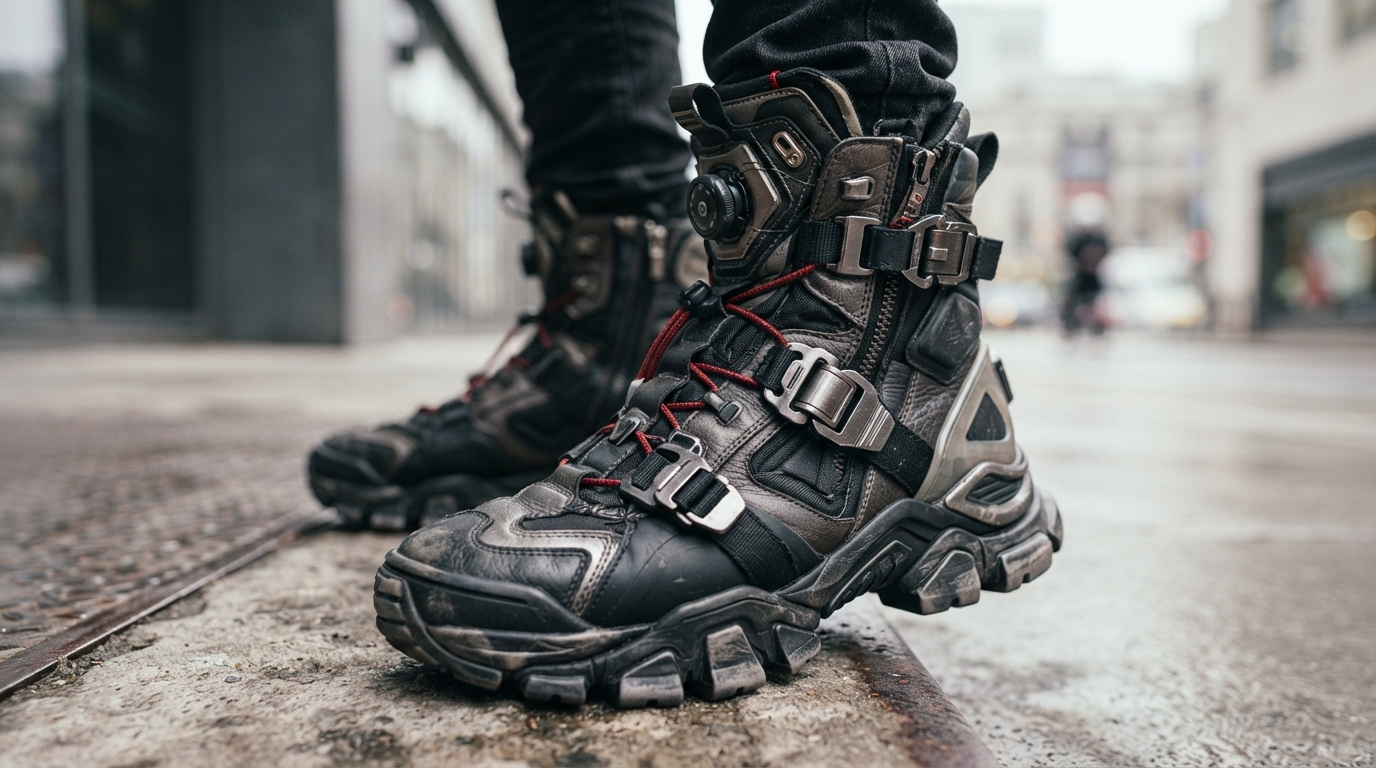
A boot with an exaggerated sole does a lot of the same work as a bold jacket - it's a silhouette choice as much as a footwear choice. The thick sole reads as protective and utilitarian, which fits neatly into cyberpunk's broader "built to survive something" attitude.
What to look for: a sole with visible tread or segmented construction rather than a flat, smooth base, along with minimal branding and a matte or slightly textured finish over a glossy one. Lace-to-toe designs and side-zip closures both read well, since they suggest quick, functional access rather than pure decoration.
Styling tip: chunky boots pair best with slimmer trousers. Bulky footwear under equally bulky pants flattens the silhouette instead of contrasting it, which is the opposite of what you want.
Reflective and Metallic Details: Where Cyberpunk Footwear Earns Its Name
This is the detail that separates a plain black sneaker from a genuinely cyberpunk one. Reflective piping, metallic overlays, and subtle glow-in-the-dark accents catch light in a way that nods directly to the neon-lit aesthetic the whole style is named for.
Use it sparingly. A single reflective panel on the heel or side of a sneaker reads as intentional. A shoe covered edge to edge in reflective material can tip into costume territory, especially in daylight when the effect isn't doing anything for you visually.
Metallic hardware - eyelets, toe caps, heel tabs - works the same way jewelry does elsewhere in a cyberpunk outfit: a small amount of shine goes a long way against a mostly matte, mostly black base.
Color: Keeping Footwear Inside the Palette
Cyberpunk footwear should generally follow the same rules as the rest of the capsule - black, charcoal, or dark grey as the base, with room for exactly one accent color if you want it.
All-black or all-charcoal footwear is the safest and most versatile choice, since it works with every outfit formula without becoming the focal point.
A single accent-color sneaker - electric blue, acid green, hazard orange - can work as the one loud element in an otherwise quiet outfit, but treat it the same way you'd treat an accent bag or accessory: if the shoes are loud, everything else needs to stay quiet.
Avoid mixing multiple accent colors across footwear and other accessories in the same outfit. One accent color per outfit is the rule that keeps cyberpunk fits from reading as chaotic, and footwear is not an exception.
Seasonal Footwear Swaps
Cyberpunk footwear needs small adjustments across the year, just like the rest of a capsule wardrobe.
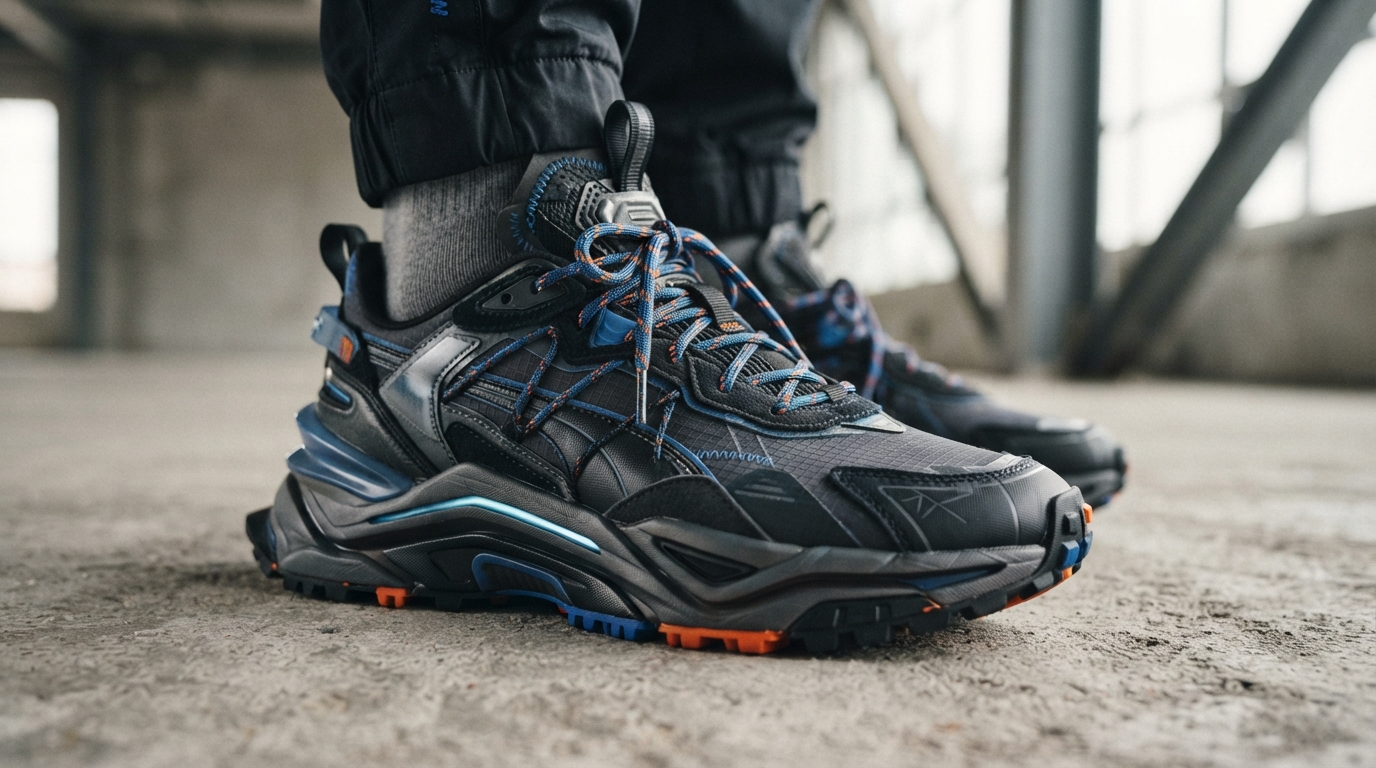
Warmer months call for lighter high-tops or technical sandals over insulated boots. A mesh-paneled sneaker with reflective trim keeps the aesthetic intact without the discomfort of heavy footwear in the heat.
Colder months are where chunky, insulated boots get to do their full job - more structure, more sole, and a genuinely warm build rather than just a visual statement. This is also when a boot's water resistance actually gets tested, so prioritize sealed construction over pure looks.
Transitional weather is the trickiest to dress for. A mid-weight high-top with a water-resistant coating usually covers both a cool morning and a warmer afternoon without needing a footwear change partway through the day.
Materials That Actually Fit the Aesthetic
Cyberpunk footwear benefits from the same material logic as the rest of the capsule - technical, structured, slightly armored, rather than soft and casual.
Synthetic leather and coated canvas hold their shape better than plain cotton canvas and pick up a slight sheen that reads as more tech-forward. They're also more weather-resistant, which matters if your footwear is doing double duty as everyday wear.
Mesh paneling, when used deliberately rather than as a budget material, can suggest a more technical, performance-driven design - especially when paired with contrasting overlays rather than a single flat material across the whole shoe.
Rubber and TPU soling with visible segmentation or lugs reinforces the "built for movement" read that flat, smooth soles don't communicate.
Matching Footwear to Cyberpunk Outfit Formulas
The right footwear choice shifts depending on which version of a cyberpunk outfit you're building.
The everyday uniform - fitted top, straight-leg cargos - pairs well with a clean low-top or a moderate high-top in all-black. Nothing flashy; the shoes support the outfit rather than lead it.
The statement layer built around a graphic tee wants quiet footwear - plain black boots or sneakers with no reflective detail - so the printed piece stays the focal point.
The full tech look is where chunky boots or reflective-detail high-tops belong. The whole outfit is already maximalist, so footwear can match that energy.
The off-duty remix calls for the most casual footwear in the capsule - simple low-tops, minimal detail - since the rest of the outfit is already dialed back.
The night-out formula is a good place for one subtle metallic or reflective detail on an otherwise dark boot or sneaker, echoing whatever single accent piece the rest of the outfit is built around.
Building a Cyberpunk Footwear Capsule
You don't need five pairs of shoes to build a working cyberpunk footwear rotation. Two or three well-chosen pairs cover almost every outfit formula.
Start with one all-black pair - either a high-top or a chunky boot, depending on which you'll reach for more often - as your daily default.
Add one pair with a reflective or accent-color detail for outfits where you want footwear to carry more visual weight.
Round out with a lighter, low-top pair for warmer weather or quieter, off-duty outfits where the boots would feel like overkill.
Consider one statement pair last - a boot or sneaker with a bolder reflective or accent-color treatment - once the foundational pairs are already covering your everyday needs. This is the piece to reach for on nights out or when an outfit needs one clear focal point below the waist.
Caring for Cyberpunk Footwear
Technical and synthetic materials need slightly different upkeep than standard canvas sneakers.
Wipe synthetic leather and coated finishes with a damp cloth rather than scrubbing, since harsh brushing can dull the slight sheen that makes the material read as technical in the first place.
Stuff boots when not in use to help them keep their shape, especially chunky-soled styles where the upper can crease and collapse if left flat for long periods.
Protect reflective panels from direct heat and repeated folding, which can crack the reflective coating over time. Store shoes with reflective detailing upright rather than crushed into a bag.
Rotate pairs rather than wearing one shoe daily. Giving footwear a day to fully dry and decompress between wears extends both sole life and the shape of the upper, which matters more for structured, technical builds than for soft casual sneakers.
Common Cyberpunk Footwear Mistakes
Pairing sleek, minimal outfits with bulky, overbuilt sneakers. If the rest of your outfit is quiet and fitted, chunky footwear fights it instead of complementing it. Match the scale of your shoes to the scale of the rest of the fit.
Overusing reflective and metallic details. A single well-placed panel reads as considered. A shoe covered in reflective material head to toe reads as trying too hard, especially away from actual neon lighting.
Ignoring sole condition. A worn, flattened sole undercuts the "prepared for anything" attitude that footwear is supposed to communicate in this aesthetic. Cyberpunk footwear should look ready to move, not worn down.
Buying footwear in an off-palette color. A pastel or warm-toned sneaker will always feel like an outlier next to a black-and-accent cyberpunk capsule, no matter how well-made the shoe is.
Choosing looks over construction. A boot that photographs well but has a stiff, non-articulated sole will be uncomfortable within a day of real wear, and discomfort is the fastest way to stop reaching for a piece entirely. Function should back up the look, not just imitate it.
Frequently Asked Questions
Are high-tops or low-tops better for cyberpunk style?
Neither is universally better - high-tops suit tactical, maximalist outfits, while low-tops work better with cleaner, quieter fits. Match the shoe to how loud the rest of the outfit already is.
Do cyberpunk sneakers need to be black?
No, but black, charcoal, or grey should make up the bulk of your footwear capsule. One accent-color pair is fine as long as it's treated as the loud element in an otherwise quiet outfit.
How much reflective detail is too much?
If the reflective material covers more than a panel or two, it's likely too much for daylight wear. A single strategically placed accent reads as intentional; full coverage reads as costume.
Can I wear regular sneakers with a cyberpunk outfit?
Yes, as long as they're in the right color family and don't clash with the rest of the outfit's silhouette. The details - reflective panels, chunky soles, technical materials - are what push a shoe from "works fine" to "actually reads as cyberpunk."
How do I know if a pair of boots is worth the investment?
Check construction before checking the graphics or color: articulated soles, reinforced stitching at stress points, and genuine (not printed) texture all signal a boot built to last through repeated wear rather than a few photos.
Should sneakers or boots be the first footwear purchase for a cyberpunk capsule?
An all-black high-top sneaker is usually the more versatile first buy - it works with more outfit formulas than a chunky boot does, and it's a lower-commitment way to test how often you actually reach for the aesthetic before investing in bulkier footwear.
Final Thoughts
Footwear is one of the fastest ways to sell - or undercut - a cyberpunk outfit. Stay inside the palette, pick a silhouette that matches how loud the rest of your fit is, and let one reflective or metallic detail do the talking instead of covering the whole shoe. Get the shoes right, and the rest of the outfit reads as considered from the ground up.